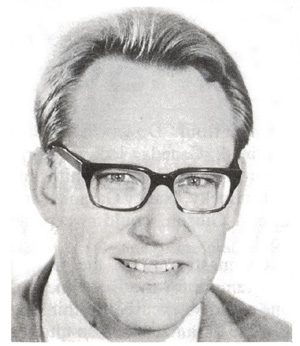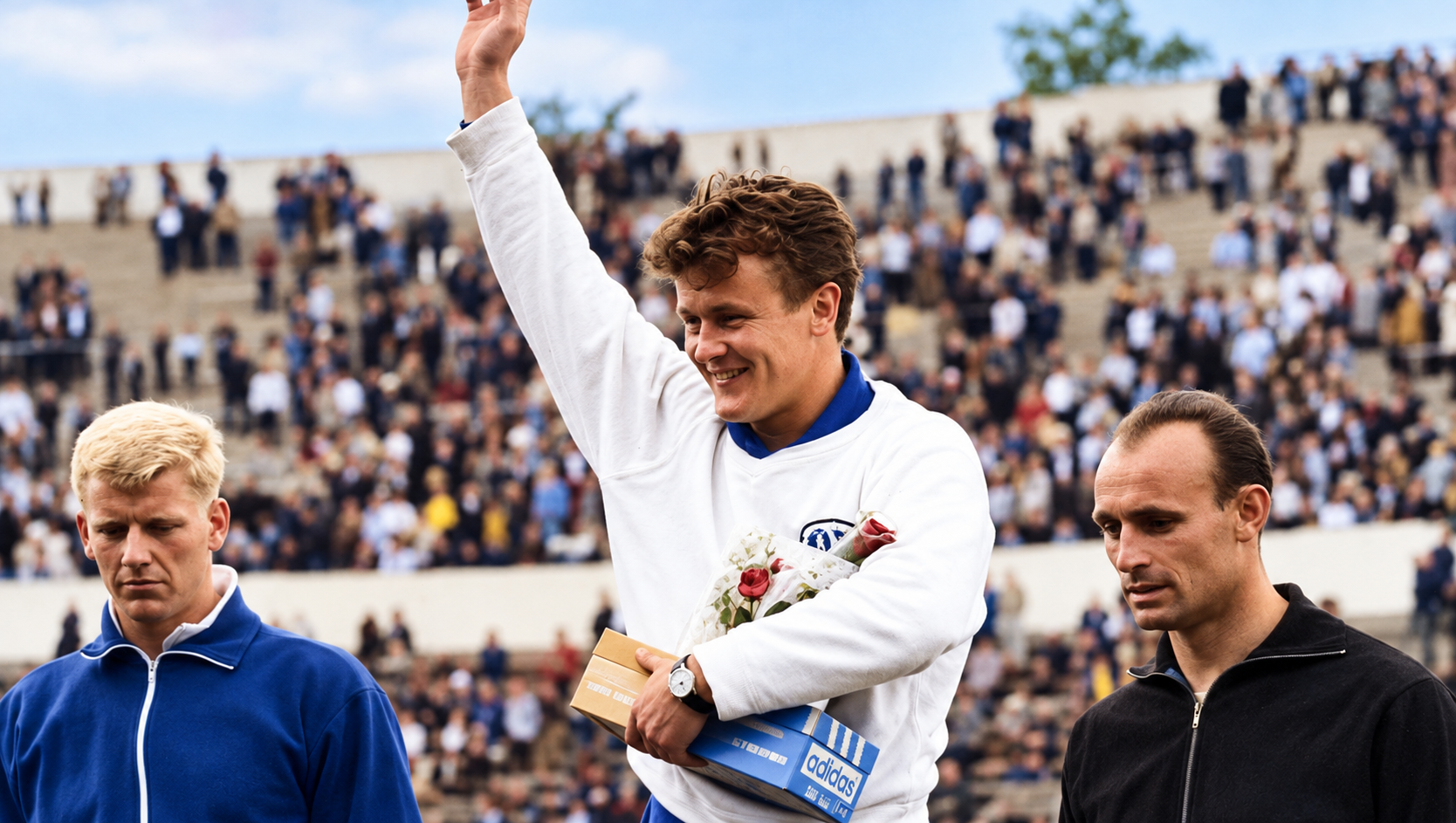
"What an honour it was to meet Pauli Nevala and Jorma Kinnunen at the 1968 Olympic Games in Mexico City."
Those words could easily have been the beginning of a much longer diary entry, because meeting these two Finnish javelin throwers left an impression on me that has lasted for more than half a century.
Pauli Nevala had arrived in Mexico City as the defending Olympic champion, having won the gold medal at the 1964 Tokyo Games. But the 1968 competition did not go his way. In the qualification round, his best throw was judged to be flat, and he failed to advance to the final.
Jorma Kinnunen, however, was about to produce one of the most extraordinary throws I have ever witnessed.
It happened in the fifth round of the final.
I had seen thousands of javelin throws by that point, but this one was different. Jorma absolutely hammered the throw.
Unfortunately, he missed the point of the javelin badly.
The spear stalled almost immediately after leaving his hand.
The old-rule aerodynamic javelins were fascinating in that regard. If they were thrown cleanly through the point, they could seem to float forever. But when the point was missed, the javelin could suddenly lose its aerodynamic efficiency and stall dramatically.
That is exactly what happened to Jorma's throw.
And yet, despite the severe stalling action, the throw travelled an astonishing 85.82 metres.
I remember thinking that had Jorma struck the point properly, we might have been looking at a world-record throw.
Even today, I believe that view is shared by others who were there and saw exactly what happened.
I'll come back to that throw in a future segment about Jorma because it deserves a much closer examination.
Then came the sixth round.
Jorma stepped onto the runway once again.
This time, he got it right.
His final throw travelled 88.58 metres — a personal best and a new Finnish national record.
It also earned him the Olympic silver medal.
The gold went to Janis Lusis of the Soviet Union, whose winning throw of 90.10 metres also came in the final round.
It was an extraordinary finish to an extraordinary competition.
But what fascinated me most about Jorma wasn't simply the distances he threw.
It was the way he threw.
In Finland, Jorma was known as Piikkujättiläinen — the "Little Giant."
The nickname was fitting. At only about 5 feet 8 inches and 176 pounds, he certainly wasn't physically imposing by the standards of many elite throwers.
But watching him on the runway, you would never have guessed that.
Jorma carried himself with tremendous purpose.
As he approached the delivery, he drove through the final stages of the run with two powerful bounds before hitting what, in my opinion, was the best left-leg block I had ever seen.
There was something almost violent about the commitment.
He looked as though he was running into a brick wall and actually looking forward to the collision.
And then came the yell.
On almost every full-effort competition throw, Jorma released the javelin with a tremendous forceful cry. It was part of his throwing identity, just as much as his rhythm, his blocking action and his extraordinary commitment to the throw.
I had admired the way Jorma threw so much that I had copied the rhythm of his final steps in my own run-up.
That decision proved to be much more significant than I could have imagined at the time, as it lead to me having the best throw of my life, and qualifying to make the Canadian Olympic Team.
The following year, on June 8, 1969, Jorma Kinnunen went to Tampere, Finland, and threw 92.70 metres.
A new world record.
And then, in late July of 1970, I made my first trip to Finland.
That is when something quite magical happened.
But that is another diary entry in this continuing chapter.