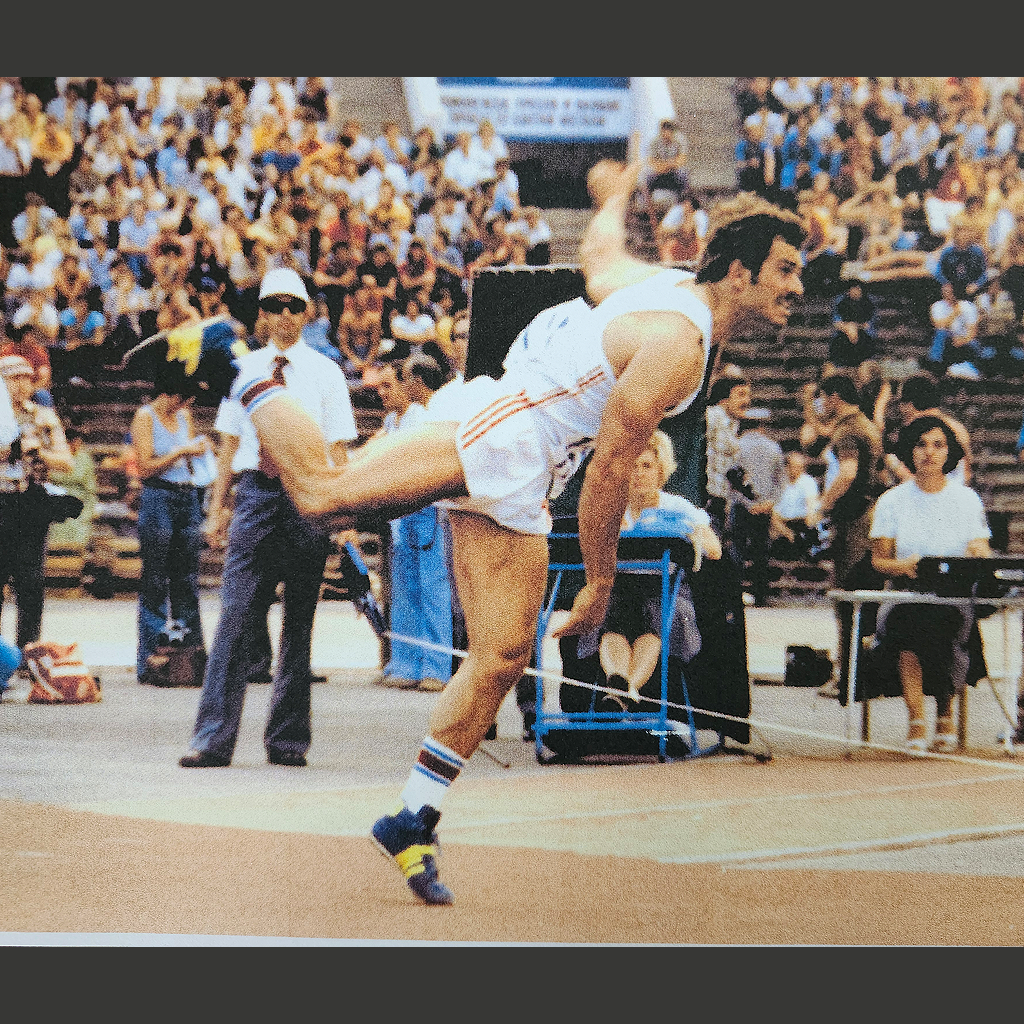
"Good prospect." Those were the only two words I wrote in my diary after meeting John Corazza for the first time.
My diary is now 62½ years old, and according to its pages, that meeting took place on Saturday, April 5, 1975. At the time, I had no way of knowing that those two simple words would mark the beginning of coaching one of Canada's most gifted javelin throwers.
The introduction happened almost by accident.
A few days earlier, one of my athletes, Peter Thompson, was training in the University of Ottawa weight room. He noticed an exceptionally powerful-looking athlete and asked what event he competed in.
"I'm a javelin thrower from New Brunswick," came the reply.
Peter immediately said, "Do you know there's a javelin coach here in Ottawa?"
That's how John found his way to one of our Saturday morning testing sessions.
At the time, we were using a battery of tests developed by Finnish javelin coaches. Over many years, the Finns had established remarkable relationships between specific jumping performances and eventual throwing distances. Their research suggested that athletes who reached certain standards of explosive power, provided they developed sound technique, had the potential to throw extraordinary distances.
One of those tests was deceptively simple: five standing bounds, beginning with both feet together.
My athletes completed their three attempts while I recorded the distances. Before John took his turn, I remember saying, "You haven't done this before, so let's see where you are. We'll look for improvement at the next testing session."
What happened next stunned everyone.
Most of my athletes were landing somewhere between 11.5 and 14 metres.
On his very first attempt, John flew more than two metres farther than anyone else.
It wasn't just the distance.
It was the violence of the takeoffs and landings. Every time his feet struck the track, you could hear the explosive force echo across the facility. We knew immediately we were witnessing something very unusual.
Then came the jump that none of us has ever forgotten.
Sometime during the following winter, we were using plywood boxes for plyometric training. Two boxes were stacked together, creating an obstacle about four feet high, roughly eight inches wide, and six inches deep.
Someone challenged John.
"Think you can jump over those?"
I assumed he'd simply split his legs and straddle the boxes.
Instead, he stood motionless for a moment, looking intensely focused.
He made a slight preparatory hop...
Landed...
Then launched.
What happened next still seems almost impossible.
John rose so high that he tucked both feet completely beneath him and cleared the obstacle cleanly without brushing it.
It wasn't just a jump.
It looked like levitation.
Even today, nearly fifty years later, the athletes who were there still talk about it. Whenever I tell the story, I glance at my watch and joke that at the peak of the jump John must have looked around and said,
"I guess I'll come down now."
Five years after that first meeting, on March 20, 1980, John recorded a 17.50-metre five-bound test.
That performance sits at the very top of the Finnish predictive standards: an explosive-power level associated with throws of approximately 95 metres.
To my knowledge, only Tero Pitkämäki has ever demonstrated comparable jumping ability among Finland's elite javelin throwers.
Looking back, those two words in my diary seem almost understated.
"Good prospect."
Sometimes coaches don't need pages of analysis.
Sometimes all it takes is seeing one extraordinary performance to recognize that they're standing in the presence of exceptional talent.
Back to All Stories